
Inside Warrick Property Tax Records
One Warrick County tax record is really a chain of linked facts. The Assessor sets the parcel's assessed value first. The Auditor then applies deductions, exemptions, tax caps, and approved rates. The Treasurer builds the bill, posts payments, and tracks unpaid installments. Reading all three parts together is what keeps a gross assessment from being mistaken for a balance due or a sale price.
| Record field | What the entry means | Official source |
|---|---|---|
| Land, improvement, total | The components and total of the assessed value | Assessor and Auditor property card |
| Deductions and credits | Approved reductions applied before the final charge | Warrick County Auditor |
| Tax district and units | The township, school, town, library, and other units tied to the parcel | Property card and tax bill |
| Installments and payments | Charges, receipts, penalties, and remaining balance by year | Warrick County Treasurer |
| Delinquency or sale notice | A warning that needs current status and redemption confirmation | Treasurer and current tax-sale posting |
The public DataPitStop pages carry a "Not for Official Use" warning. They work well as everyday records. Still, an owner who needs a certified value, payoff amount, or appeal record should confirm it with the county office that holds it.
Warrick Tax Search Fields
The county's Warrick Property Tax Search accepts several keys at once. The portal itself warns that too many filled fields can bury a sound record. Start with a parcel number, owner surname, or property address. Narrow from there. Remember the site updates nightly.
| Control | Input | Useful approach |
|---|---|---|
| Dist# | Tax district | Use only when the district is known |
| Parcel # | County parcel string | Most exact parcel-level key |
| Name | Owner or taxpayer | Try the last name alone for a split or combine |
| Tax Year | Year selector | Match the bill or assessment year being reviewed |
| Property Address | Situs street address | Try road-name variants if the full entry fails |
| Maximum results | Number limit | The inspected screen used 100 |
The live result count runs to nearly 48,000 records, while a single page shows only the first 100. That contrast matters. A blank first attempt does not mean no Warrick County property tax record exists. Change the search key or contact the Treasurer.
Trace a Warrick Tax Bill
Begin with the identifier tied to the land itself. A bill may name the payer, but the parcel keeps its record. Owner names and mailing addresses change over time. Warrick parcel numbers follow Indiana's structured format and begin with county code 87.
- Run one field in the county tax search, preferably the full parcel number or property address.
- Select the matching parcel and compare the situs, legal description, duplicate or map number, and tax district.
- Read the chosen year's installments, payments, penalties, deductions, credits, and print option.
- Open the property-information card for land, improvement, gross assessment, owner-history, and district context.
- Call the Treasurer for a current payoff or sale status, and ask the Assessor or Auditor to confirm official value or deduction questions.
A prior owner's name can linger on a bill after a sale closes. Indiana taxes are paid in arrears, and the bill follows January 1 assessment-year ownership. A buyer who closed later may not see the new deeded name on the bill. That may take until the next billing cycle. For the title question, the most recent recorded deed answers it.
Note: A printed online statement is a handy snapshot, though amounts can shift after each nightly update.
Warrick Assessment Terms
Terms on a Warrick tax card describe different stages of the Indiana billing process. Keeping them separate makes any comparison fair, especially when two parcels carry different uses, caps, or deductions.
- Assessed value
- The mass-appraisal value placed on land and improvements for tax administration; it is not a private appraisal or promised sale price.
- Market value
- An estimate of likely exchange value under market conditions, which can differ from assessment and recorded consideration.
- Tax levy or rate
- The approved charge applied through the taxing units shown on a parcel's bill, expressed in Indiana per $100 of assessed value.
- Homestead deduction
- An approved owner-occupied property reduction handled through the Auditor's deduction process.
- Tax lien
- A public claim tied to unpaid taxes; the current amount and release status need office confirmation.
Indiana's general tax caps are commonly one percent for homesteads, two percent for other residential and agricultural property, and three percent for other real and personal property, subject to exceptions and voter-approved items. A cap limits part of the bill. It never turns the assessment into market price.
Warrick Value Card Detail
The Whitaker parcel sample shows why a property card rewards a line-by-line read. Its 2026 work-in-progress table separates land, residential and nonresidential improvements, and total value. Land shows $39,400, improvements $275,700, and the total $315,100 as of that dated view.
The same card labels those figures non-certified and subject to change. Historical rows distinguish annual adjustment, agricultural update, as-of date, method, equalization factor, and notice status. Compare like with like: the same assessment year and value category. Never put a gross total beside a capped or taxable amount. Each figure must come from the same year.
That card also lists property class, acreage, township, school corporation, legal description, transfer history, and building details. These fields help explain the appraisal. An owner challenging it should rely on the official notice. The county's response matters too.
Warrick Deductions and Tax Caps
The Auditor's piece of the record sits between assessment and collection. Warrick County materials identify homestead and supplemental deductions. They also cover programs for qualified older owners, veterans, and heritage barns. Each has its own form and proof rules. A deduction posted on one parcel cannot be assumed for the next parcel. It also cannot be assumed for the next owner.
Use the county card to see which deductions and credits were actually posted. For the current form, filing instructions, or questions about a missing or denied entry, use the Warrick County Auditor. The Assessor handles value. The Auditor handles these reductions and the tax-rate crosswalk.
A corrected deduction changes taxable value or tax due. It does not rewrite the deed, the parcel boundary, or fair-market evidence.
Warrick Tax Dates and Fees
The spring deadline for 2026 is May 11. The fall deadline is November 10. Both dates come from the current Treasurer notice. Before sending money near either date, check the live bill and the county's closure notices. A July 24, 2026 Judicial Center closure shows why an older hours listing should not be treated as proof the counter is open.
Current online-payment terms list a 2.5 percent card charge with a $1.75 minimum, a $3.95 Visa debit charge, a $1.50 eCheck charge, and phone jurisdiction code 2407. An older Treasurer FAQ gave lower card-minimum and debit figures. The current Warrick County Treasurer page controls. Read the payment screen before you submit.
In-person, mail, phone, and online routes each fit a different need. The web gives a quick working balance. The Treasurer settles the rest. Ask the office for a current payoff, a receipt question, a returned payment, or delinquent status.
Warrick Delinquency Records
Warrick's 2026 notices include an Eligible Tax Sale Posting. Get the dated posting. Match its parcel or duplicate number to the Treasurer record before treating a card warning as proof that a parcel was sold.
The Treasurer FAQ sets eligibility at three or more unpaid installments, describes notice activity in July or August, and allows a twelve-month redemption period. Status moves. A warning is not a sale. Check the Treasurer first. The Recorder holds any later instrument, and the Clerk handles any court filing affecting the parcel. A payment plan, redemption, sale, or release counts only when a record confirms it.
Verify the warning. A tax-sale flag is a research lead, not a final statement of sale, title, or redemption.
Contest a Warrick Assessment
Form 130 starts the process. It goes to the local assessor. A taxpayer may request an informal conference, then review by the county Property Tax Assessment Board of Appeals. Later review can reach the Indiana Board of Tax Review and the Indiana Tax Court. Form 130 can address the current assessed value plus objective errors, like the wrong person, a deduction decision, a clerical error, or a faulty property description.
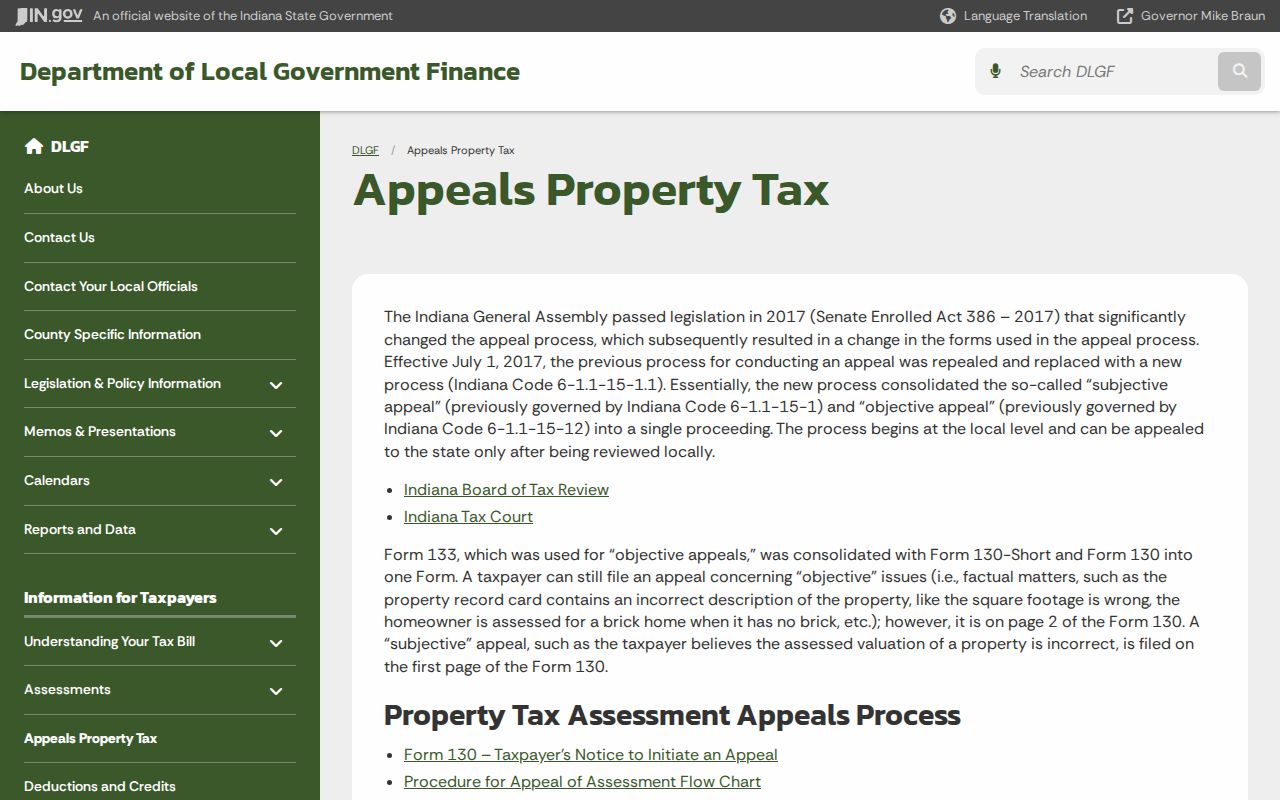
The Indiana Department of Local Government Finance appeal page supplies the current forms. It also lays out the statewide process. Warrick County posts no single local filing date or Form 11 delivery calendar, so ask the Assessor for the deadline tied to the notice in hand. An old calendar can mislead. The DLGF appeal page is the state's official hub. It marks where local review ends and state review begins.
Before filing Form 130, gather your evidence. Keep the parcel card, the assessment notice, comparable sales, and photos in one place. Save the dated filing receipt too. That paperwork supports your Warrick County appeal.
Deadline check. Confirm the active filing window with the Warrick County Assessor before submitting Form 130; no local date was verified in the research.